Shotcrete vs. Traditional Concrete: Cost, Durability, and Efficiency Comparison
Shotcrete vs. Traditional Concrete: Cost, Durability, and Efficiency Comparison
When it comes to large-scale infrastructure, tunneling, or mining, the choice of concrete application can make or break a project’s timeline and budget. While traditional cast-in-place concrete has been the industry standard for decades, shotcrete technology has redefined how we approach structural reinforcement in challenging environments.
At Denmak Makina, we understand that selecting the right method is not just about the material—it’s about the machinery and the engineering behind it. In this guide, we compare shotcrete and traditional concrete to help you decide which is best for your next project.
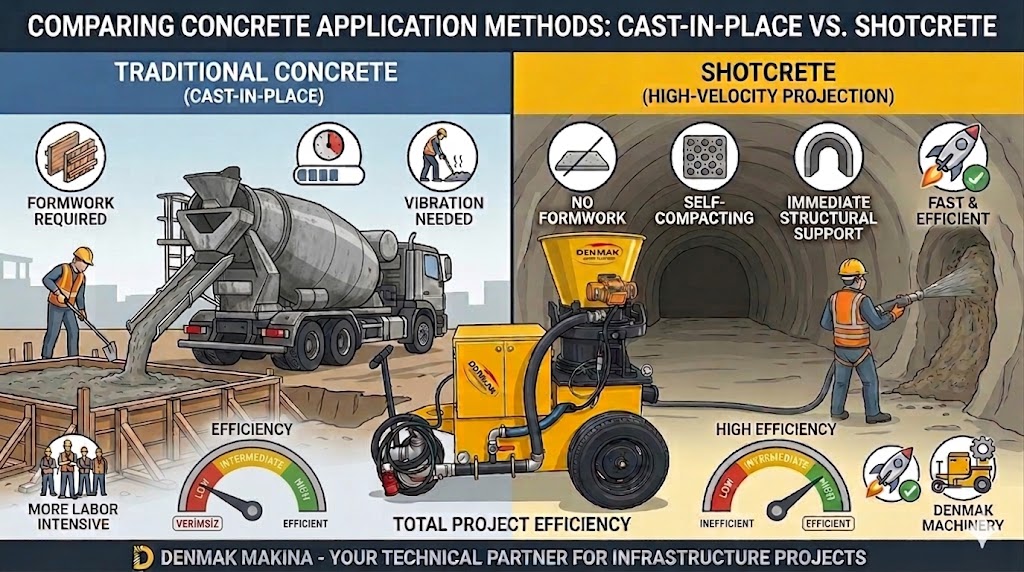
The most significant difference lies in the application. Traditional concrete requires extensive formwork (molds) and manual vibration to ensure there are no air pockets. Shotcrete, however, is projected at high velocity onto a surface, achieving compaction upon impact.
No Formwork Needed: Shotcrete is ideal for complex geometries like curved tunnel walls or irregular soil nailing surfaces where setting up molds would be slow and expensive.
Immediate Support: In mining and tunneling, providing instant structural integrity is life-saving. Shotcrete can be applied immediately after excavation.
Because shotcrete is applied under high pressure (using advanced shotcrete machines), it creates a very dense and high-strength bond.
Low Permeability: The high-velocity impact reduces the water-to-cement ratio, resulting in a denser structure that is highly resistant to water frost and chemical attacks.
Bond Strength: Shotcrete bonds exceptionally well to rock and existing concrete, making it the superior choice for repair and restoration work.
At first glance, the equipment cost for shotcrete might seem higher than traditional pouring. However, when you calculate the Total Project Cost, shotcrete often wins:
Reduced Labor: You eliminate the teams needed for formwork assembly and disassembly.
Material Savings: With modern machines that offer low rebound rates, material waste is minimized.
Time is Money: Faster application means projects are completed weeks or months ahead of schedule, reducing site overhead.
The success of a shotcrete application depends entirely on the consistency of the flow and the precision of the dosing. Using a low-quality pump leads to high "rebound" (concrete falling off the wall), which wastes money.
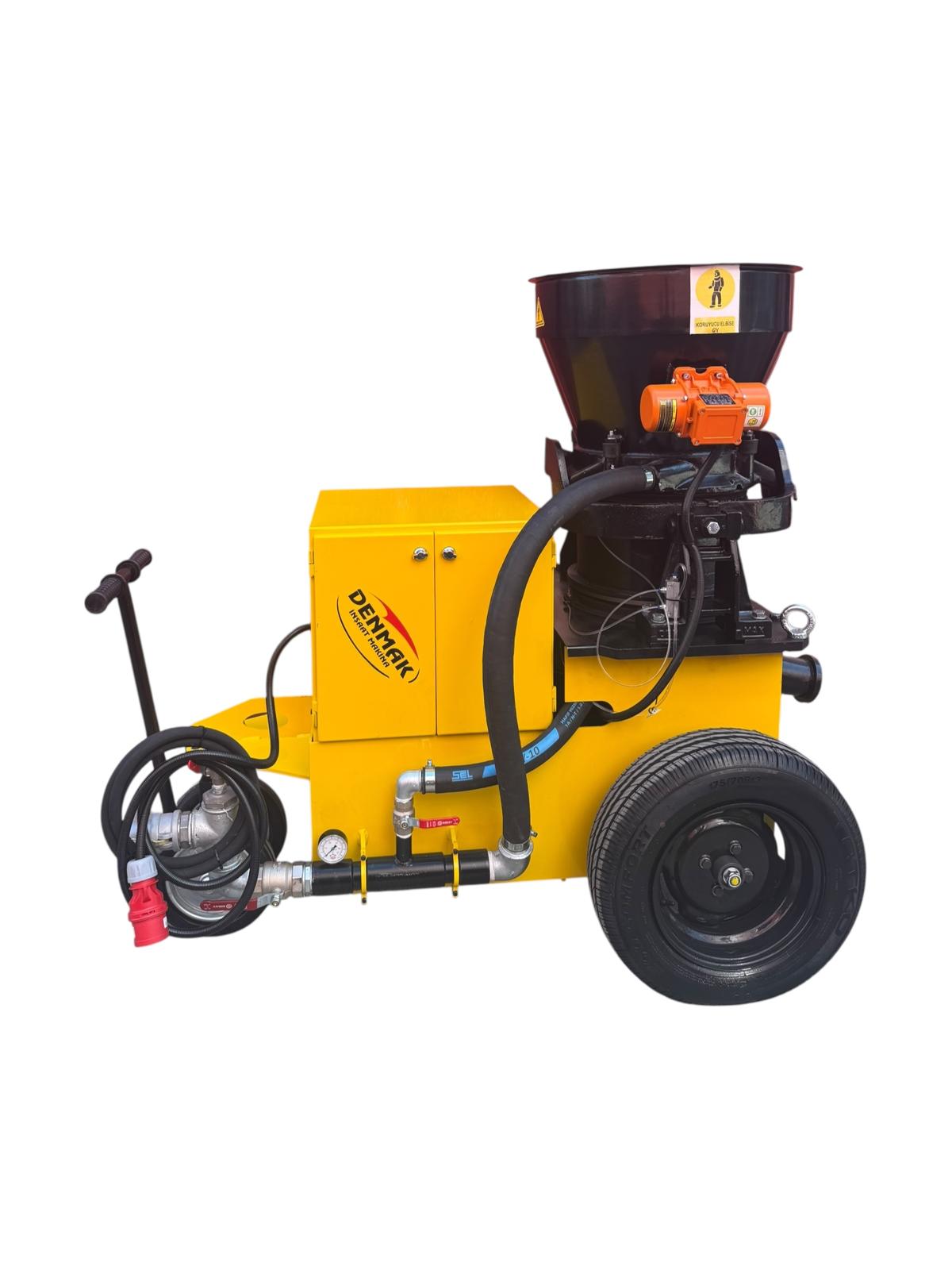
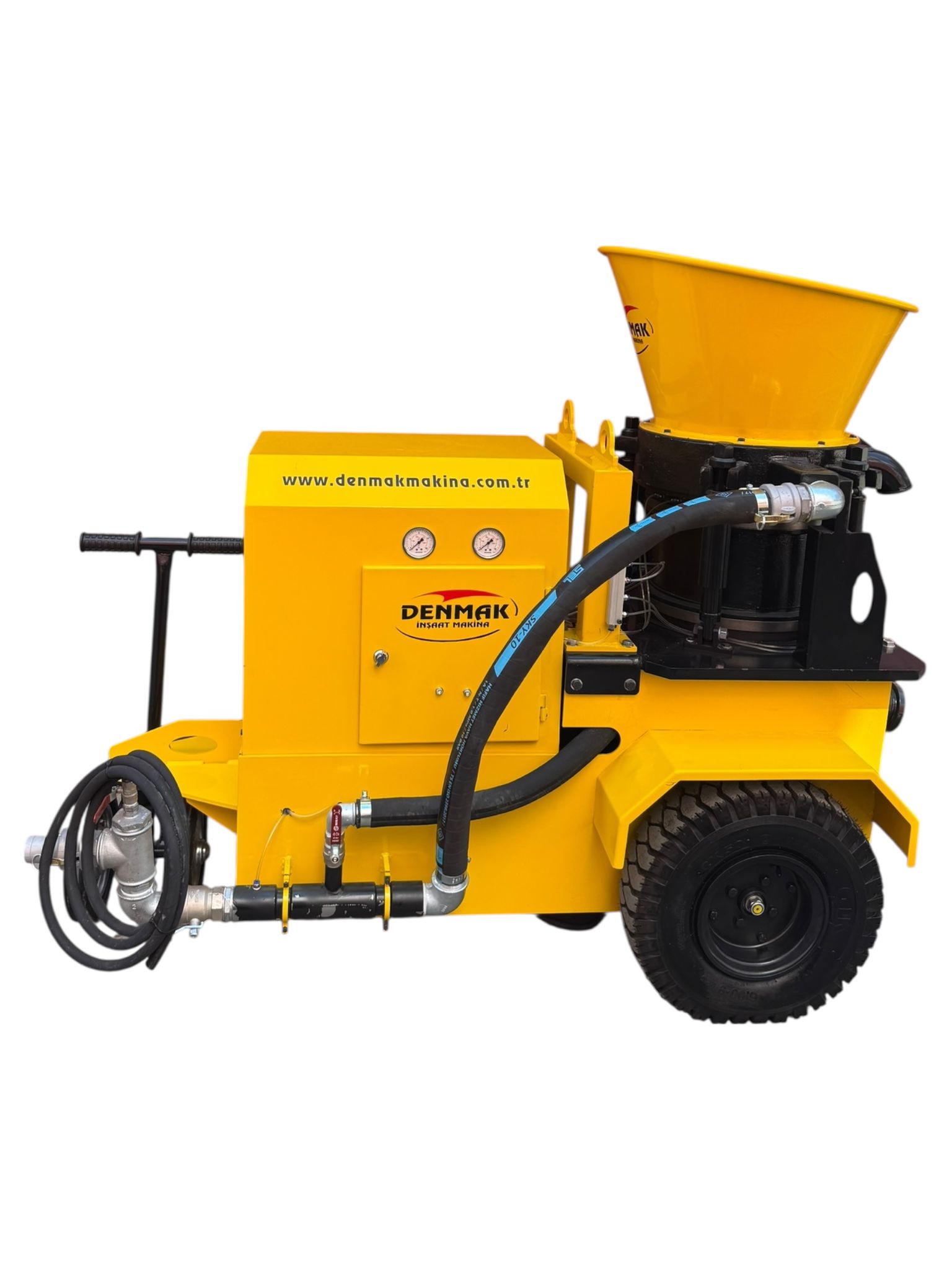
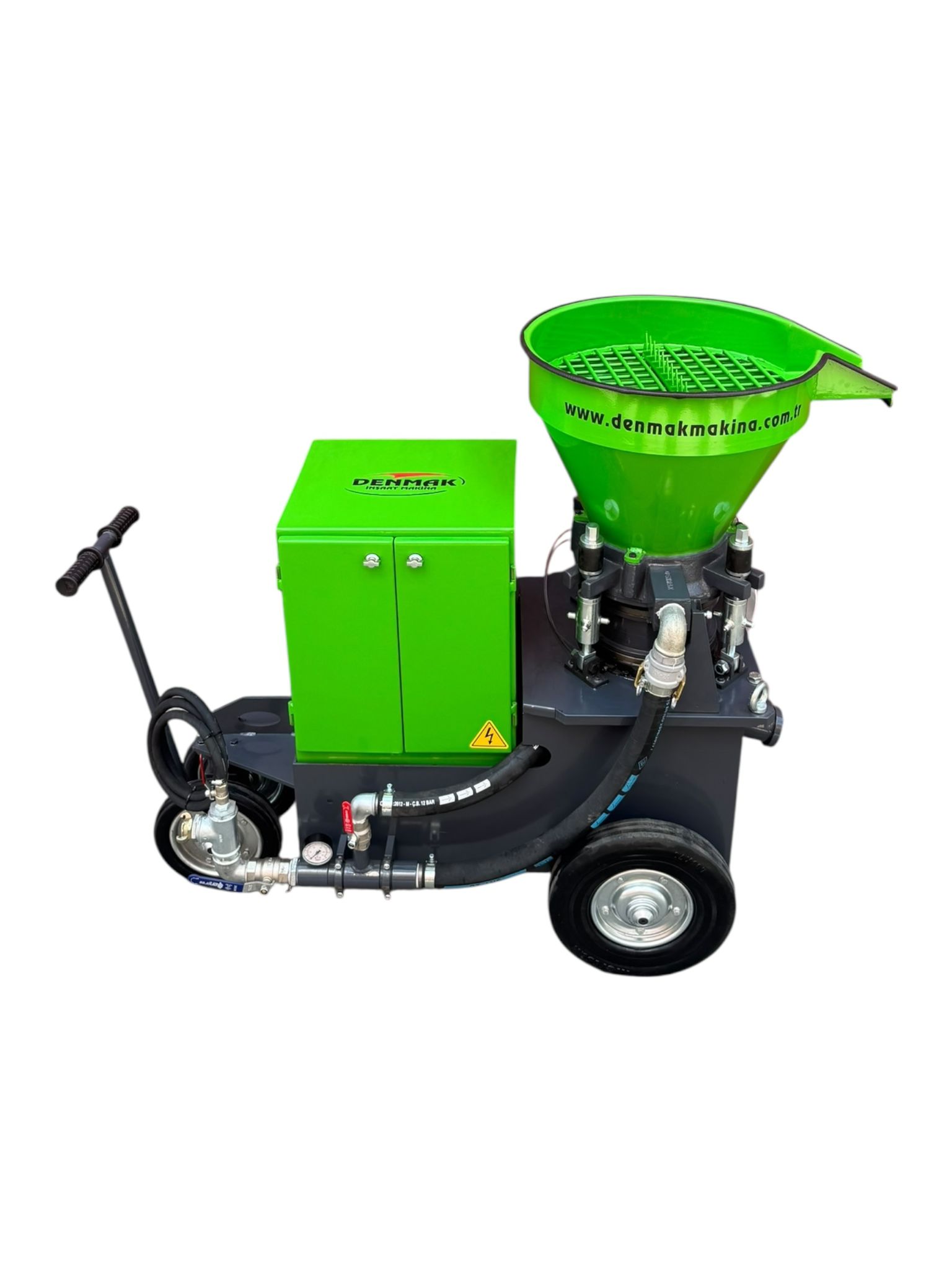
At Denmak Makina, we design our Shotcrete Machines to handle the toughest conditions in tunneling and mining. Whether you need a rotor-system for dry-mix or a heavy-duty pump for wet-mix, the goal is the same: maximum bond strength with minimum waste.
Choose Traditional Concrete for flat, horizontal surfaces like building foundations or floor slabs where formwork is simple.
Choose Shotcrete for tunneling, slope stabilization, swimming pools, mining, or any project where speed, vertical strength, and complex shapes are involved.
Q: Is shotcrete as strong as regular concrete?A: Yes, in many cases, it is stronger. The high-pressure application results in a denser material with higher compressive strength and better bond characteristics.
Q: Can shotcrete be used for structural repairs?
A: Absolutely. Due to its excellent bonding capabilities and the fact that it doesn't require molds, it is the preferred method for reinforcing old bridges, dams, and walls.
Q: What is the main cause of waste in shotcrete?
A: "Rebound" is the main cause of waste. Using high-quality Denmak spare parts and properly calibrated machines significantly reduces rebound rates.
Gallery