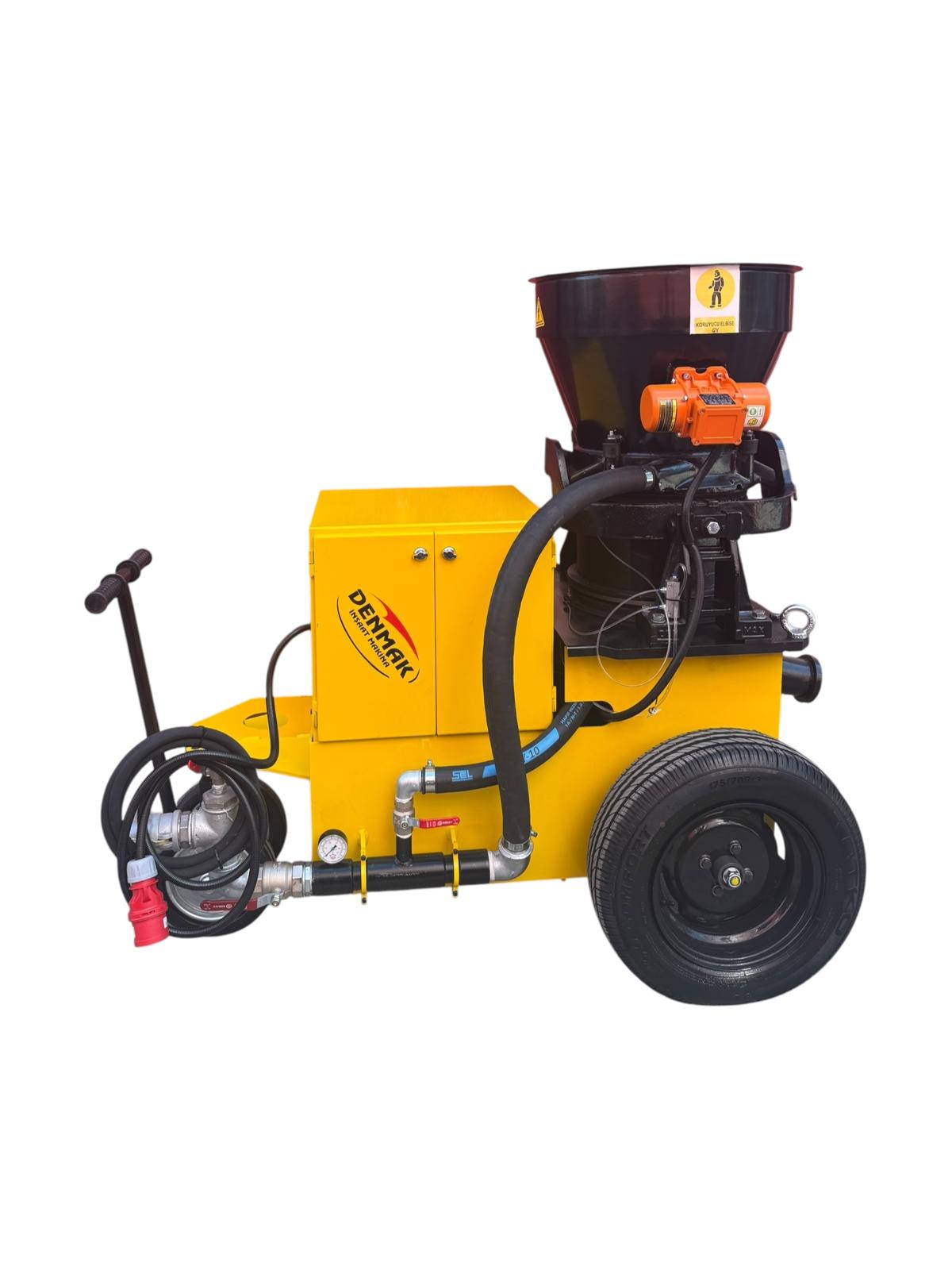
Shotcrete and Injection Applications in Winter Conditions: Professional Precautions Against Freezing Risks
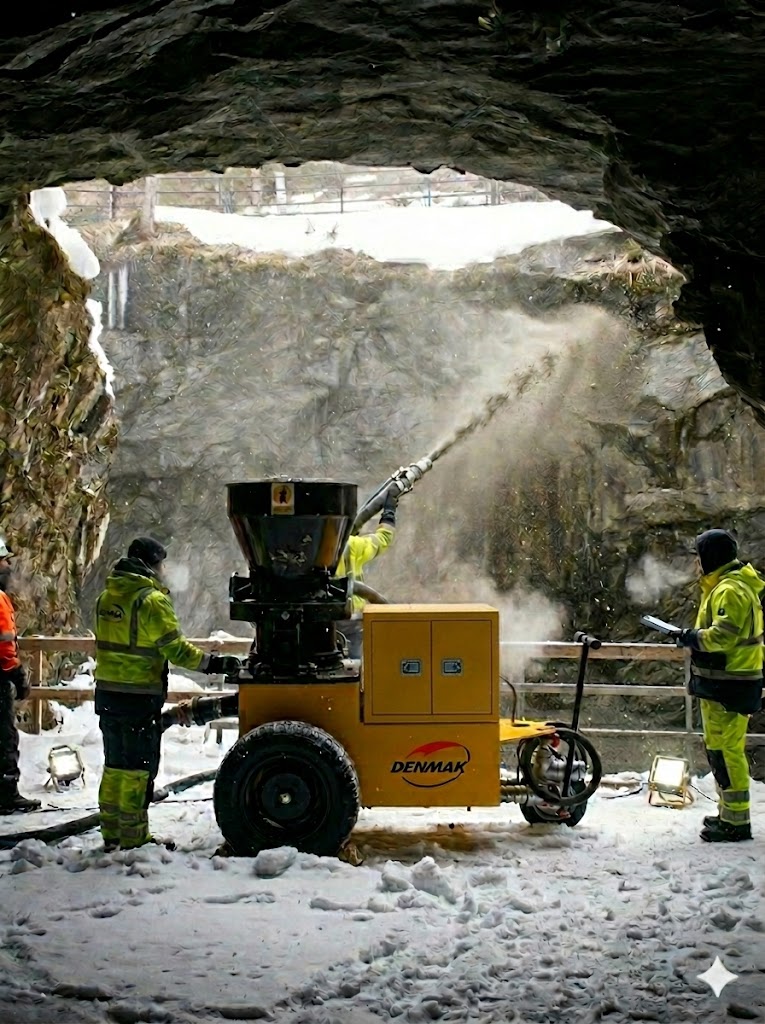
Shotcrete and Injection Applications in Winter Conditions: Professional Precautions Against Freezing Risks
Freezing temperatures directly threaten the chemical structure of concrete and the mechanical components of machinery. In projects where the air temperature drops below +5C , concrete setting slows down, and the freezing of water inside the equipment can cause serious, irreparable damage.
As Denmak Makina, we recommend the following professional preparation protocols to ensure uninterrupted operation and high efficiency at your jobsites during winter months:
Drainage Procedure: No water or concrete residue should be left inside the machine, pump body, or hoses after the shift. Frozen water can cause the pump body to crack, valves to malfunction, or hoses to burst.
Hydraulic and Oil Selection: Standard oils thicken in low temperatures. Low-viscosity hydraulic oils suitable for winter conditions should be preferred to maintain system performance.
Temperature Control: Heating the concrete mixing water is critical for the healthy initiation of the chemical reaction (hydration).
Aggregate Protection: The use of frozen or snowy aggregate reduces the ultimate strength of the concrete.
Dosage Precision: Since the reaction rate of cement decreases in cold weather, the dosage of set accelerators may need to be increased. This should be precisely calibrated via Denmak Dosing Pumps.
Antifreeze Agents: Special antifreeze additives should be used in injection grouts to prevent water from turning into ice crystals.
Sprayed concrete must be protected from the cold until it reaches a certain strength. Tunnel entrances should be covered with tarpaulins, and if necessary, heaters should be used in the working area.
For more information about Denmak Makina's durable solutions for harsh field conditions, visit https://www.denmakmakina.com.tr/en
Gallery