Pushing the Limits Vertically and Horizontally: Long-Distance Shotcrete Techniques
Pushing the Limits Vertically and Horizontally: Long-Distance Shotcrete Techniques
In large-scale dam projects, deep shafts, or tunnels kilometers long, the journey of concrete from the machine to the application surface can sometimes require traveling hundreds of meters. As the distance increases, friction rises, resistance within the line climbs, and pressure drops. To push these limits while maintaining concrete quality, the correct line configuration and selection of connection components are vital.
Concrete loses energy by rubbing against the walls as it moves through the line. To minimize this loss over long distances, a strategic line structure must be established:
Fixed Steel Pipe Lines: For long-distance and especially vertical delivery, smooth-surfaced steel pipes that do not stretch should be preferred. Steel pipes do not expand under pressure, thereby transferring the pump energy directly to the concrete and minimizing friction.
Steel-Wire Reinforced Flexible Hoses: High-pressure resistant steel-wire reinforced rubber hoses are used only at the end of the line where movement is required or in curved areas. Thanks to their internal steel mesh layers, these hoses maintain their form despite high operating pressures and reduce the risk of bursting.
Hose Adapters and Reduction: Larger diameter pipes should be used at the beginning of the line, and the speed and pressure of the concrete should be stabilized using hose adapters and reductions (gradual narrowing) as it approaches the nozzle.
In long-distance delivery, the weakest points of the line are the connection areas. For a safe shotcrete process under high pressure, the following equipment is critical:
High-Pressure Clamps: Heavy-duty clamps that secure the pipe and hose joints prevent the line from opening under high vibration and pressure fluctuations.
Sealing Gaskets: Special gaskets located at every connection flange prevent the leakage of water and air pressure from the concrete. The loss of water causes the concrete to solidify quickly, leading to line blockages (plugging).
Hose Adapters: These parts, used during the transition from the steel pipe line to the flexible spraying hose, ensure that the flow continues uninterrupted by minimizing turbulence.
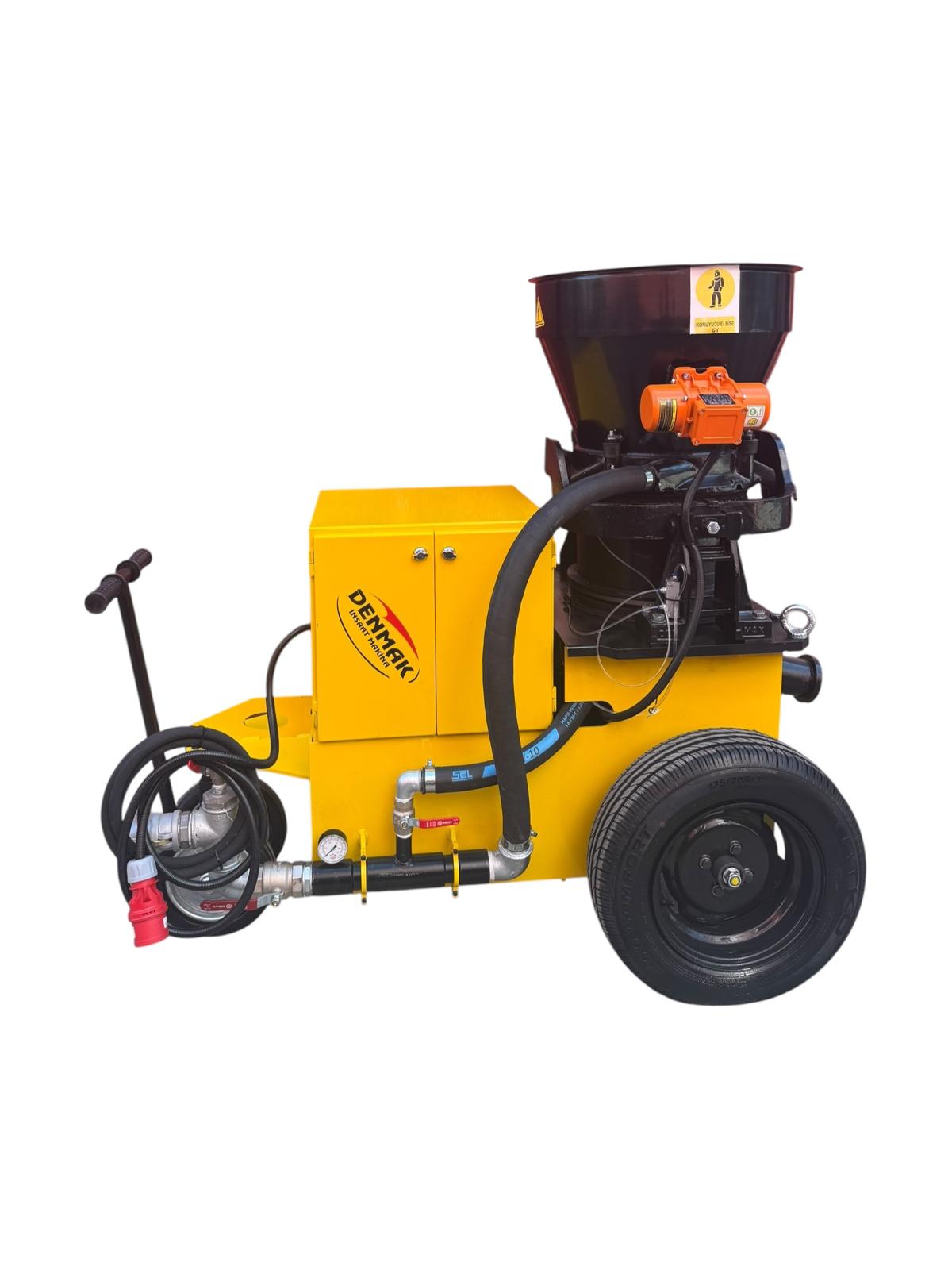
The consistency (slump value) of concrete pumped over long distances must not change along the way. Homogeneity of the mix is vital to prevent the aggregate from separating (segregation) within the hose. Denmak machines feature rotor designs that feed concrete into the line continuously and smoothly, preventing pressure fluctuations. Additionally, their expanded air inlet capacities ensure that concrete is transported hundreds of meters away without losing momentum.
When the distance increases, the nozzle inlet—the meeting point of the concrete and the liquid accelerator—becomes much more critical. The pressure inside the nozzle must be calibrated according to the pressure loss at the end of the line to ensure full mixing of air and chemicals. Denmak Dosing Pumps operate with millimeter precision even at the end of these long lines, guaranteeing that the concrete sets the moment it hits the surface.
Gallery