
Injection Applications: Engineering of the Unseen
Injection Applications: Engineering of the Unseen
Imagine water silently moving beneath a dam. It is invisible and unmeasurable—until the damage becomes evident. Or the voids formed in the foundation of a decades-old building; everything looks fine on the surface until the ground collapses.
This is exactly where injection technology comes into play: to repair, strengthen, and stabilize the unseen and the inaccessible. In this article, we share where, why, and how injection is used—along with the technical realities of the field.
Dams are not just made of concrete and steel. Their safety depends largely on a layer hidden from view: the rocky foundation upon which the dam body rests. Naturally occurring cracks, faults, and joint planes in rock formations expand over time under intense water pressure. If these paths are not sealed, water will travel through the foundation, threatening the structural integrity even if the dam body itself remains solid.
The Solution: Curtain Grouting. Holes are drilled at specific intervals from the top of the dam into the ground, and high-pressure cement grout is injected. The grout fills all cracks and voids, creating an impermeable "cement curtain." This curtain acts as a protective barrier throughout the dam's lifespan.
Critical Equipment: High-pressure resistant steel packers and large-capacity injection pumps. Rocky ground is processed with mechanical steel packers specifically designed to withstand vibration and friction.
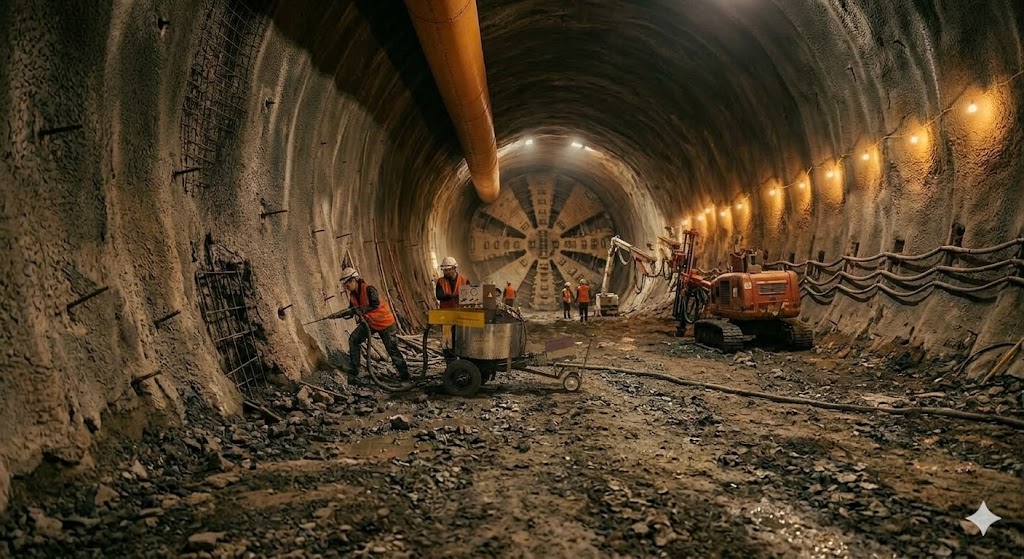
Tunneling is a process full of geological surprises. Engineers don't always work on known ground; rock types, water table levels, and fault lines encountered along the route cannot always be fully predicted. Water leakage here is not just an inconvenience—it's a structural threat.
Contact (Back-fill) Grouting: After precast concrete tunnel segments are placed, the void between the segment and the ground is filled with cement grout. Without this, the segments won't sit properly, leading to uneven load distribution.
Rock Consolidation Grouting: In loose or fractured rock, the surrounding mass is stabilized with chemical or cement-based injections. Polyurethane-based injections are often preferred for active leaks due to their instant reaction.
Not every ground is suitable for construction. Soils containing clay, silt, or heavy water can compress or shift under load. Injection prepares these grounds for foundation construction.
Jet Grouting: High-speed injection jets break up soil particles in situ to create cement-soil columns, providing vertical and lateral load capacity.
Compaction Grouting: A very thick cement mix is injected to compress the soil mass, often used to correct settlement damage in existing structures.
Soil Nailing: In sloped terrains, injection is performed around steel nails inserted into the ground, creating an internal skeleton to prevent landslides.
In the repair of historical structures, injection is perhaps the most valuable technology because it requires no demolition and integrates with the original fabric.
Void Filling: Controlled cement or polymer injection under the foundation can lift, support, and re-seat a building that has suffered from uneven settlement due to groundwater movement or traffic vibrations.
Crack Repair: Epoxy or polyurethane-based chemical injections seal cracks in reinforced concrete. While epoxy unites cracks structurally, polyurethane foam stops active water leaks in seconds.
Mine Gallery Support: Filling rock voids reduces the risk of collapse and increases worker safety.
Micropile Applications: In narrow areas, deep foundation strengthening is done via micropile injection.
HES Tunnel Sealing: In hydroelectric pressure tunnels, sealing cracks directly affects energy efficiency.
Success depends on the right equipment selection:
Packers: Inflatable packers for loose soil; mechanical steel packers for hard rock.
Pressure Management: Excessive pressure can fracture the ground; insufficient pressure fails to fill the cracks.
Chemicals: Rapid-foaming polyurethane for active leaks; slow-curing epoxy for structural repairs.
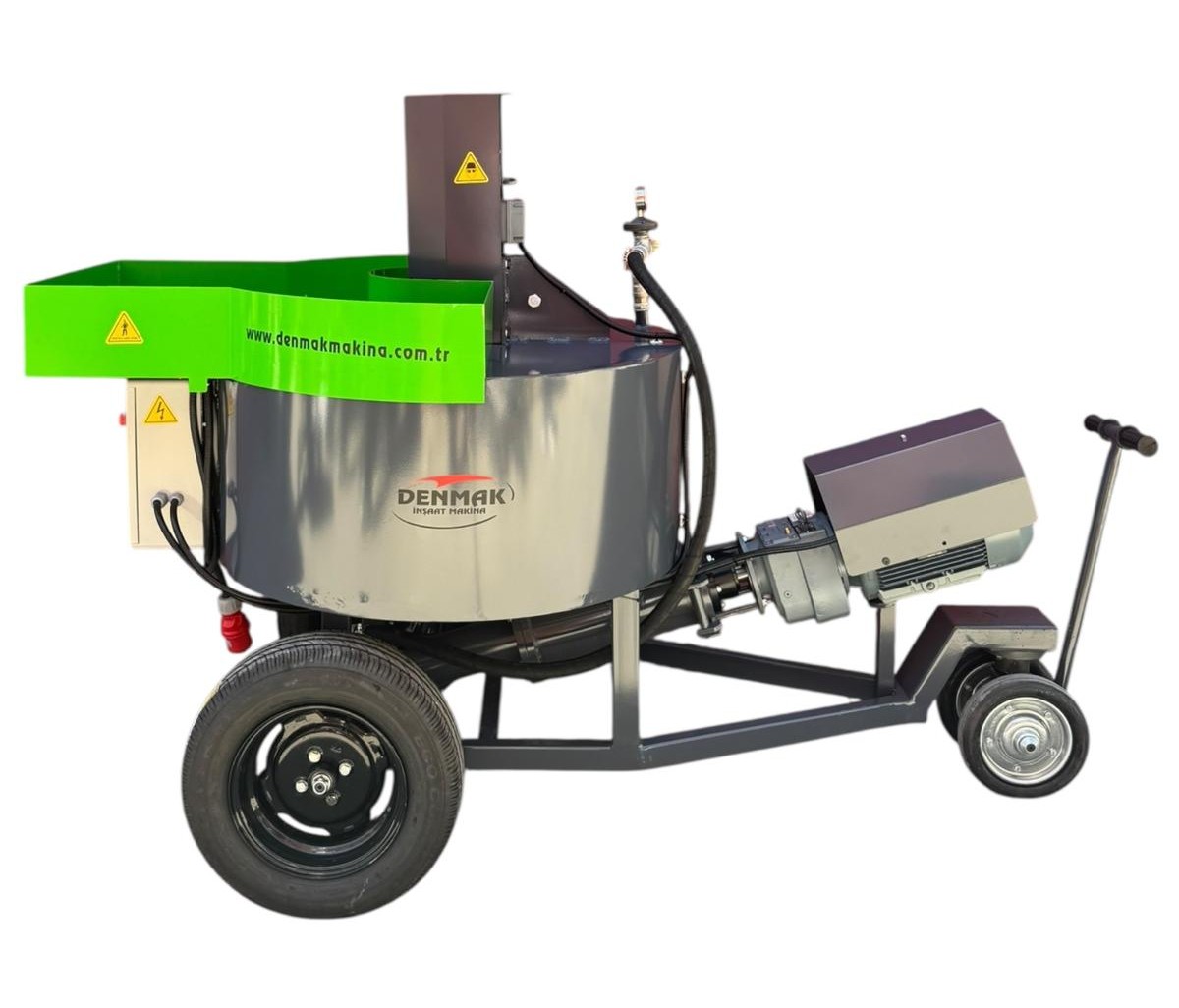
Mixer Capacity: Large-scale projects require high-capacity mixers to prevent material separation.
Injection is not just a filling process; it is a precise engineering intervention.
Gallery
_kopyası.jpg)