
History of Grouting & Injection Technology: From Origins to Modern Engineering
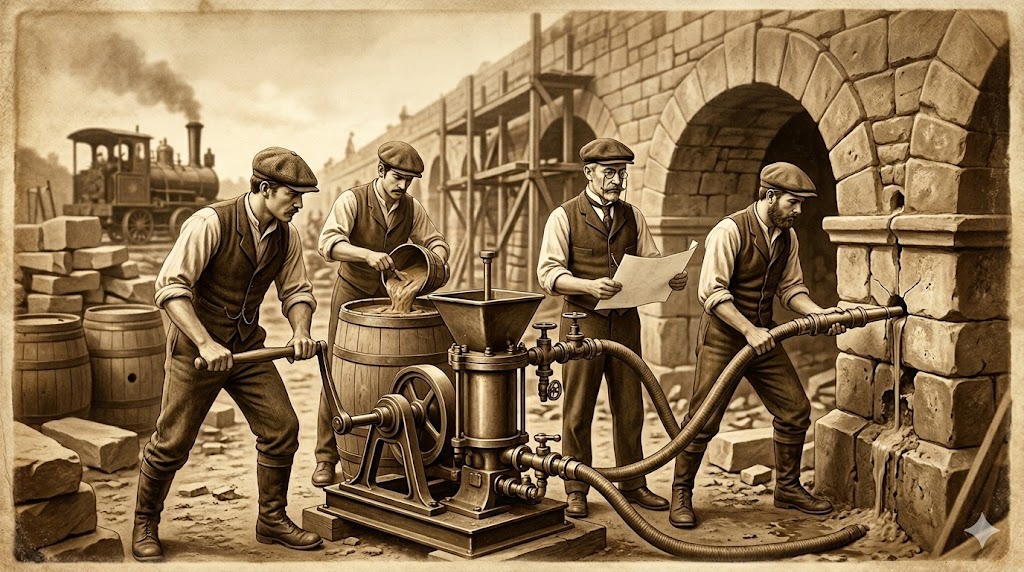
Historical Development of Injection Technology and Its Role in Engineering
Controlling groundwater and increasing the load-bearing capacity of weak soils is one of the fundamental challenges of civil engineering. The method known today as "pressure grouting" has become a technical discipline since the Industrial Revolution and an indispensable part of modern infrastructure projects.
The first modern application of grouting was performed by French engineer Charles Berigny in 1802. During repair work at the Port of Dieppe, Berigny used a manual system to pump a mixture of clay and lime under pressure to fill underground voids. By the mid-19th century, this method became a standard practice in British tunnel construction for backfill grouting behind cast-iron linings.
The widespread use of Portland cement towards the end of the 1800s fundamentally altered the strength characteristics of injection.
Dam Projects: High-pressure cement grout began to be used in major dam constructions, such as the Aswan Dam in Egypt and other European projects, to seal rock fractures.
Grout Curtain: The "grout curtain" technique developed during this period ensured the safety of large-scale hydraulic structures by creating an impermeable barrier underground.
In the second half of the 20th century, new chemical solutions and application methods were developed for micro-cracks and soft soils where cement particles could not penetrate.
Chemical Systems: Polyurethane and silicate-based injections entered the sector in the 1960s through studies in Europe and Japan. This allowed for the sealing of even the smallest voids.
Jet Grouting: Developed in the 1970s in Japan and Italy, this technology restructure the soil using high-pressure water and cement jets, creating high-capacity columns even in the weakest soils.
Today, grouting is measured not only by material quality but also by application precision.
Precision Applications: In the stabilization of historical structures like the Leaning Tower of Pisa, precise injection protocols are used without damaging the structure.
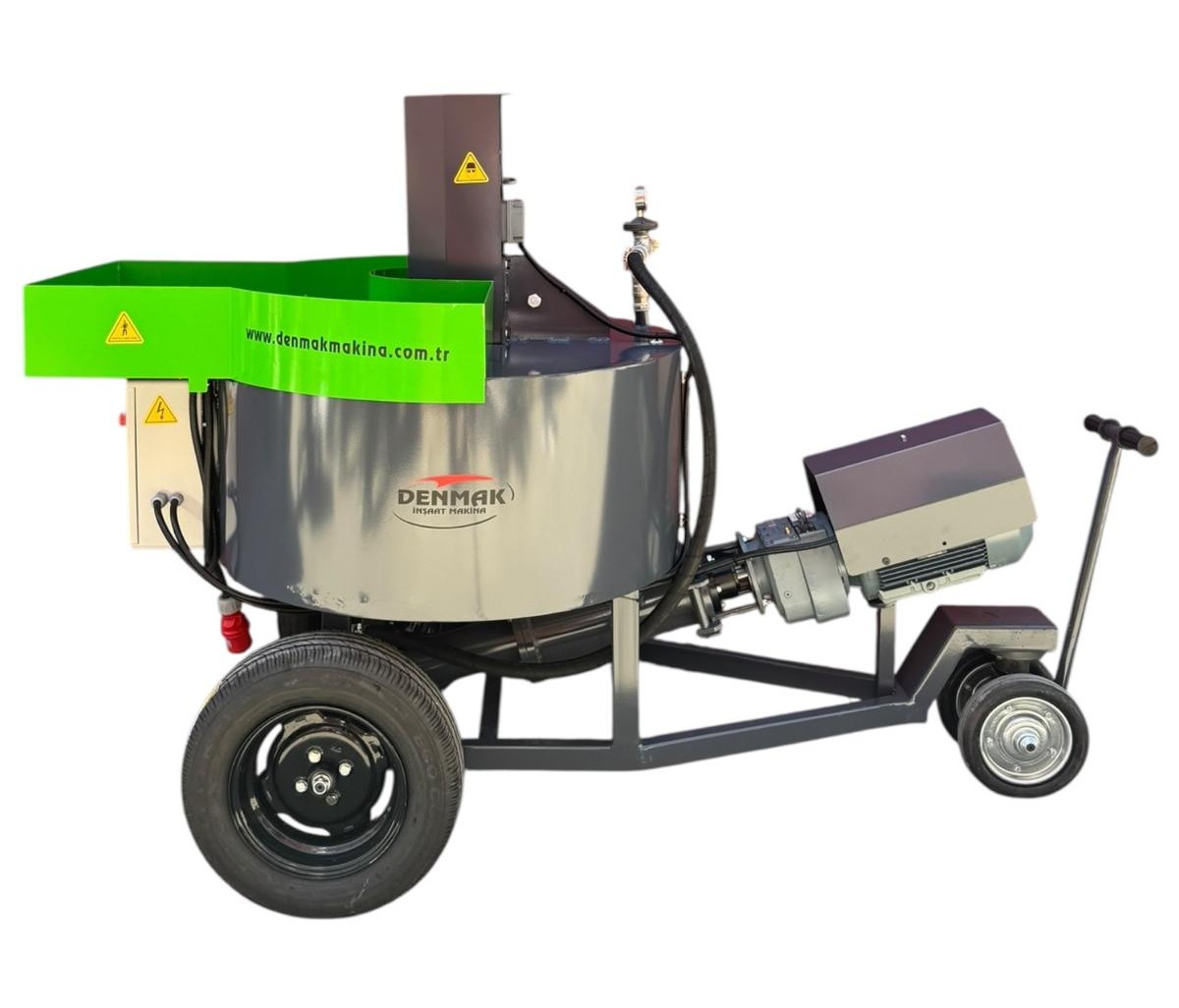
Equipment Evolution: Hydraulic pumps and digital mixing units that record flow-pressure data in real-time have replaced manual operations, minimizing engineering errors.
Conclusion From dams to subsea tunnels, injection technology is the foundation of structural safety. Today, these processes are carried out in integration with high-pressure equipment and advanced material engineering.
Gallery
_kopyası.jpg)